Short answer
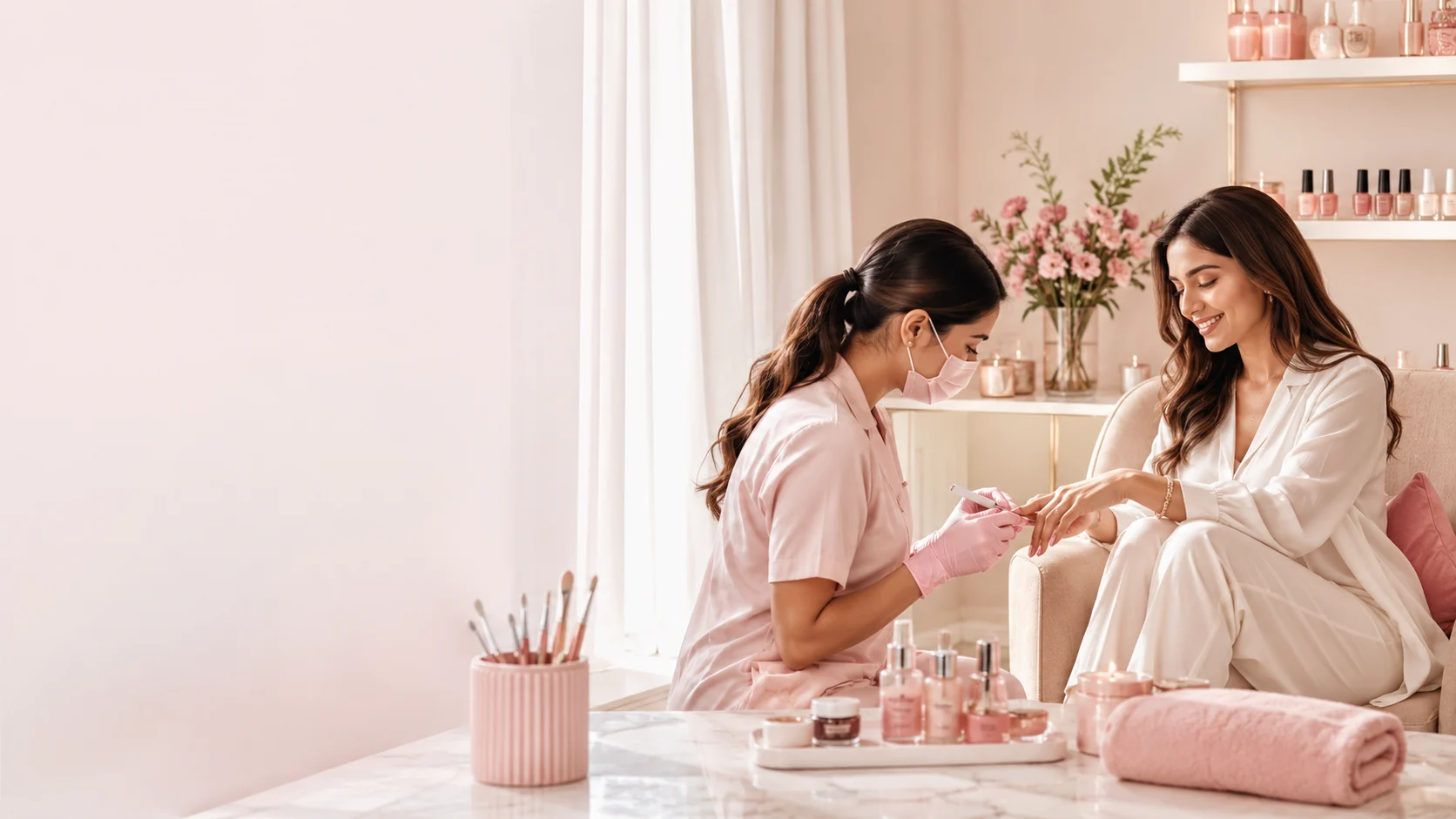
An at-home beauty service brings a practitioner and the required equipment to the client's address for a pre-agreed cosmetic appointment. It may reduce travel and waiting, support privacy and make group preparation easier. The benefit depends on a suitable workspace, transparent scope and price, realistic route planning and matching the requested service with the right practitioner.
Where the mobile format can make a difference
People with busy schedules, caring responsibilities or several services to coordinate at one address may value the format. Bridal or shoot preparation can also involve fewer location changes. The advantage is not a rushed treatment; it is moving travel and waiting time into a planned appointment window.
Privacy and a familiar setting can feel more comfortable, but a home is not automatically suitable. Poor light, interruptions, pets reaching equipment or an unstable surface can compromise the session. The service must be portable and the room prepared for the specific task.
| Goal | Potential benefit | Condition |
|---|---|---|
| Time | Less travel and salon waiting | Clear arrival range and access |
| Privacy | Familiar, quieter setting | Uninterrupted work area |
| Group booking | Sequential services at one address | People, services and order listed |
| Comfort | No return journey immediately after | Suitable table, light or reclining space |
From request to arrival
Send the service, relevant current photos, district, two possible time windows and any fixed event date. The provider should confirm route availability, expected scope, written total, inclusions and cancellation terms. For multiple clients, list each person and service separately rather than using a vague group total.
On arrival, the agreed service and workspace are checked again. Mobile delivery does not remove consultation or suitability questions. Share existing product, sensitivity, irritation or a previous reaction honestly. This helps preparation and may identify when cosmetic work should be postponed for appropriate advice.
- Service name and visual reference
- District, building access and two time choices
- Unfiltered photo of any existing product
- Each client and requested service
- Written scope, total, cancellation and contact confirmation
Choose on evidence, not convenience alone
Look for relevant portfolio work, a clear process, concrete hygiene answers and reachable contact details. Confirm who is expected to arrive and how changes are communicated. A price that changes without explanation at the door is not transparent service planning.
Loshhome is a mobile team rather than a physical salon and works mainly across Istanbul's European side. Availability is confirmed by district, route and practitioner rather than assumed for every time. Cosmetic services do not diagnose or treat health concerns and may need to be postponed.
Home scenario: when does convenience become a real benefit?
Consider a client with two young children trying to fit acrylic nails between online meetings. The practitioner's travel to the home removes the client's journey, but the benefit disappears if children enter the work zone, sockets are occupied and a meeting starts halfway through. Mobile convenience becomes real when another adult manages interruptions, an uninterrupted block is protected and a safe, clear surface is prepared before arrival.
A hotel or gated residence also needs more than a street address. External-provider rules, security registration, lift access, parking, reception permission and the room's usable workspace should be checked in advance. A practitioner waiting at the gate creates delay for this and later clients. Share the full address through the confirmed private channel rather than publicly, and record the name of the person expected to arrive.
Group coordination is another potential advantage, but ‘beauty services for three’ is not an operational brief. List each name, service, current condition, reference and sequence need. One client requesting plain gel polish, another removal plus art and a third lash extensions may require different practitioners and work zones. Confirm whether services are simultaneous or sequential and which equipment occupies which area.
Privacy means more than closing the door. The client should be able to define the working zone, approve or decline photography separately and expect payment or personal information to remain private. Being at home does not require accepting unsuitable conditions; equally, a practitioner should not be pressured into an unsafe or out-of-scope request. Clear boundaries turn mobile delivery from simple convenience into a dependable service model.
A clear handover for your first mobile beauty appointment
Start with one complete request: the service, Istanbul district, two suitable time ranges, a current photograph when condition affects scope and the result you hope to discuss. Ask the provider to confirm that the requested service is genuinely available, who will attend and what furniture, lighting, power or reclining space is needed. This prevents the convenience of home service from hiding an incomplete brief.
Before arrival, clear a stable work zone, protect it from interruptions and keep pets and food away from equipment. Share building access information early instead of while the practitioner is waiting outside. If several people are booking, match each name to a service and current-condition image. A group request is easier to coordinate when it is a written client-service list rather than a stream of separate messages.
At the start, review scope, design and any preparation concern before products are opened. At the end, save the care instructions under the exact service name and note where to send a follow-up question. Convenience should not mean silent assumptions: the best mobile appointment leaves both client and provider with the same record of what was agreed, what was completed and what requires later assessment.